Previous Productions
Archive of powerful productions that have transformed audiences and communities


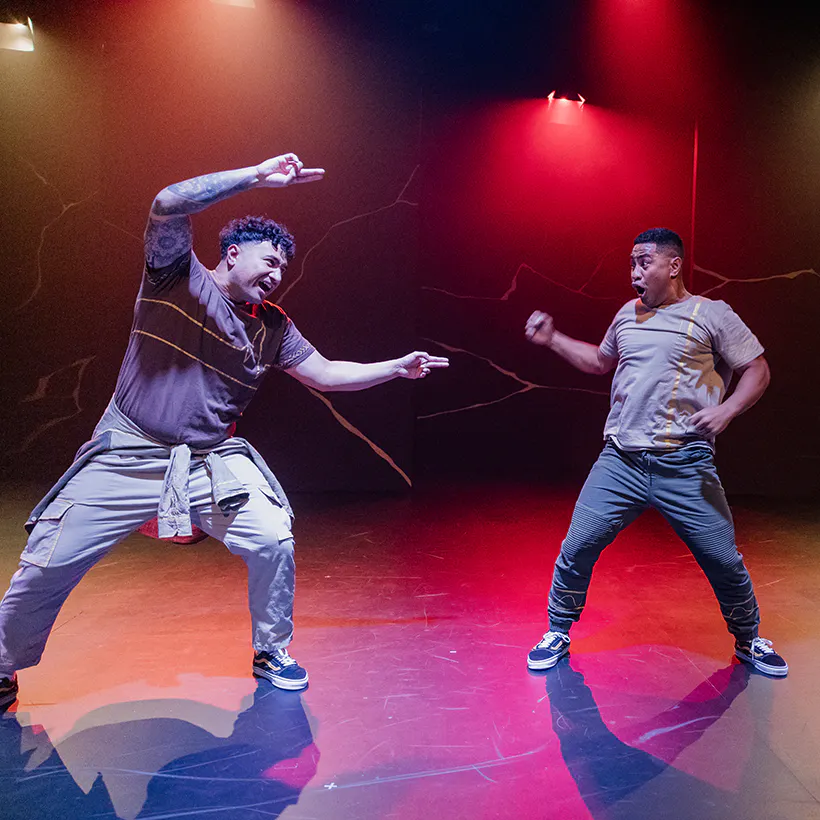
Archive of powerful productions that have transformed audiences and communities
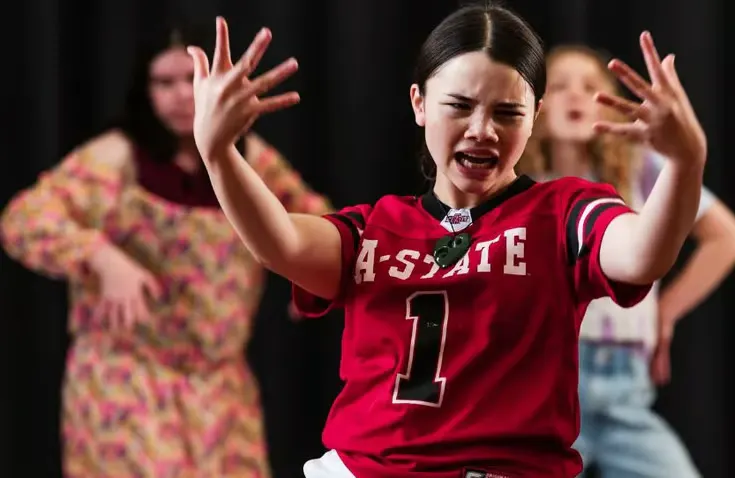
Free foundational theatre skills and creative confidence-building for ages 15-25
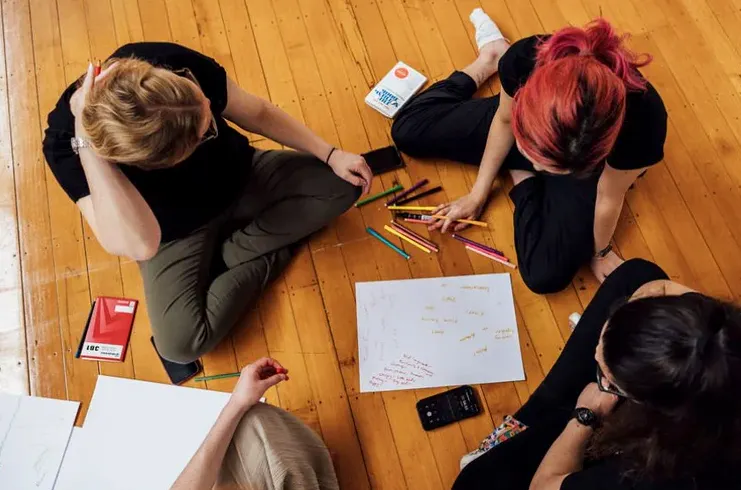
Comprehensive materials and guides for theatre education
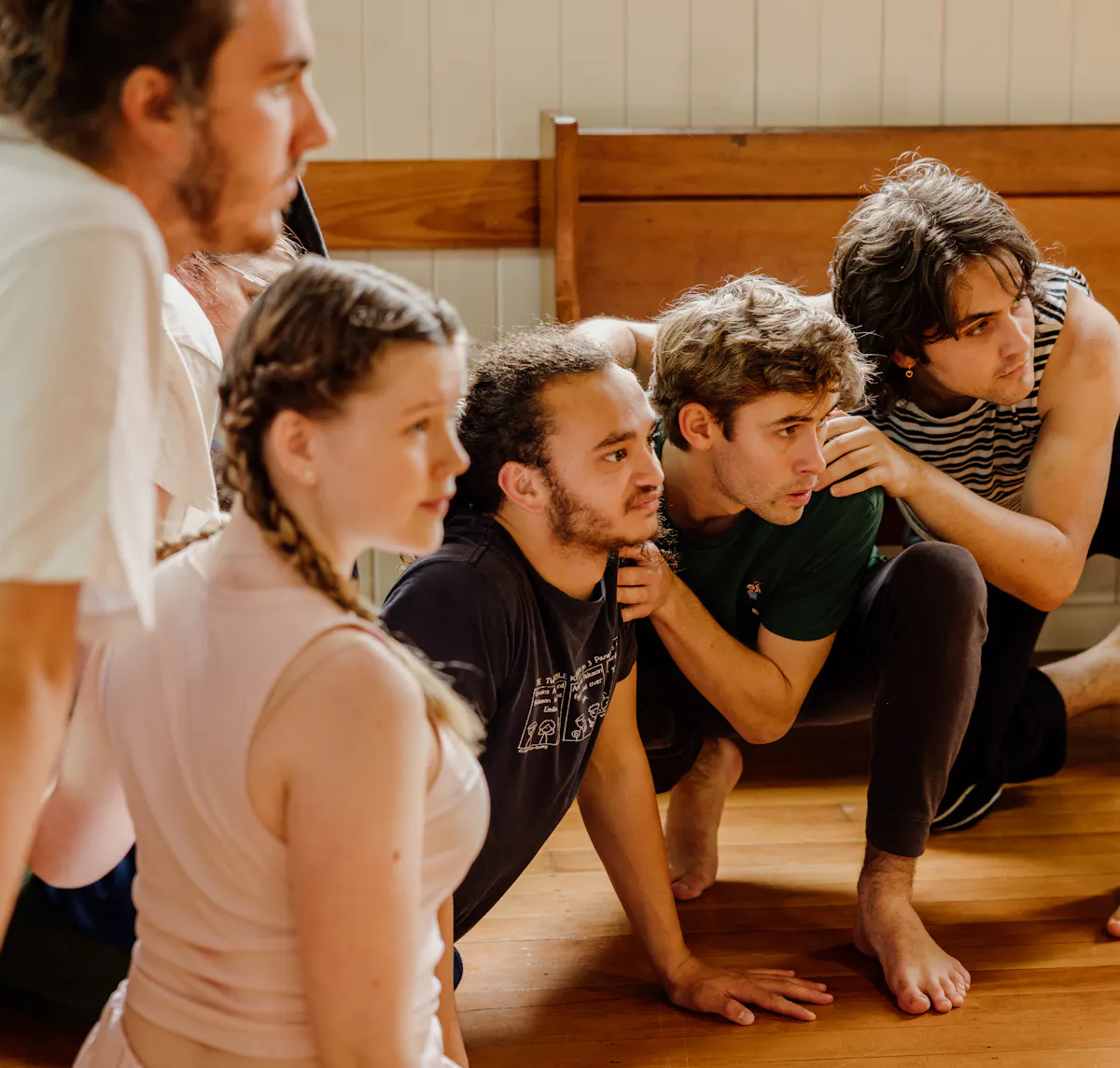
Our flagship development programme for emerging artists
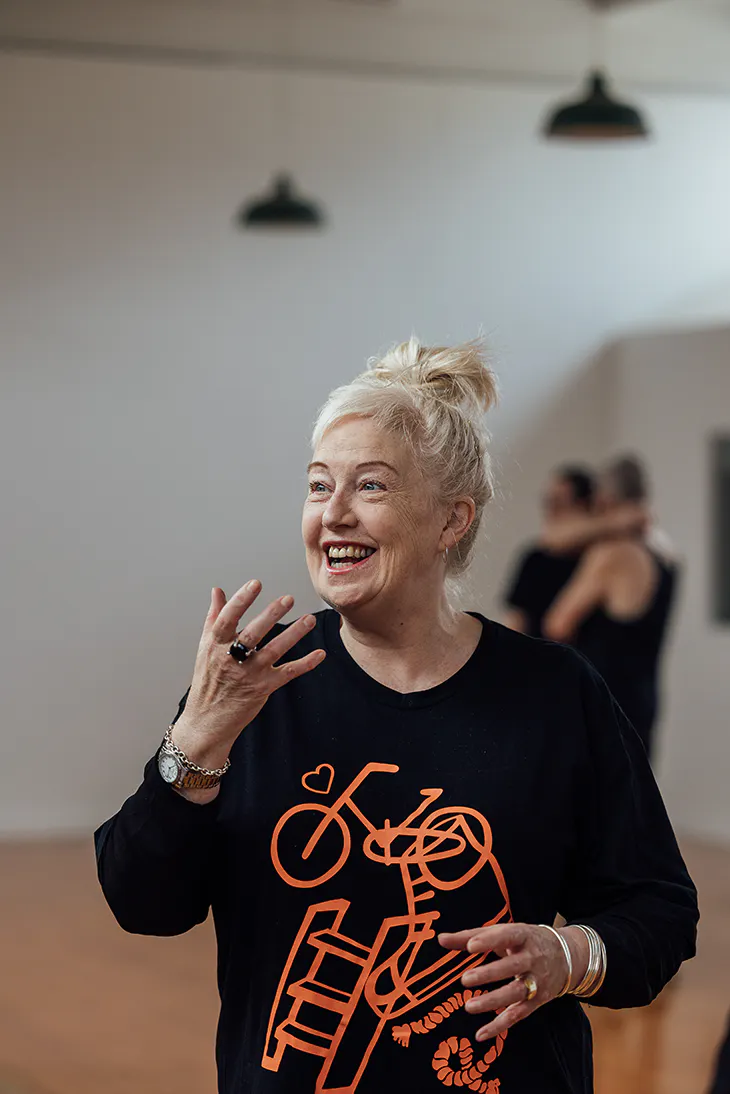
Meet the passionate artists and educators who drive our mission

562 Richmond Road
Grey Lynn, Auckland 1021
New Zealand


Monday - Friday: 9:00 AM - 5:30 PM
Saturday - Sunday: Closed
Ready to start your theatre journey? Contact our team today
Part 2: Devising and Rehearsing
SAM SCOTT
This is Part 2 of our blog series on theatre devising.
Welcome back to my next blog post on theatre devising with Massive. This one picks up where the last one left off, and is looking at the planning and devising process from November 2023 until we opened I LOVE YOU G on May 1st, 2024 at Te Pou Theatre.
Devising rehearsals were to begin on March 25th, 2024. We were to work full time 10am-5pm for three weeks and then Monday-Saturday 10am-6pm for two weeks. We would then move into Te Pou for a four day production period prior to opening night on May 1st.
There is lots that only the devising period in the rehearsal room can reveal. But before any of this can happen, one of my responsibilities as a director is to achieve everything else that can be prepared and thought through prior to this rehearsal room time. This allows for maximum use of that five-week period.
It’s a precious time, this pre-devising rehearsal period, where the show is far enough away to feel wonderfully exciting and full of promise. It is always with me every day, and I am ‘dreaming around it.’ I trust in letting things drop into my consciousness without trying to come up with answers, rather, see what presents itself. Like Mary Oliver says, ‘Love the mystery, don’t forget the mystery, be glad of it.’
I realise more and more with creating new work, and with devising in particular, that there is this wonderful juxtaposition between being extremely organised and prepared in order to allow for the unknown and the unnamed to really present itself. It’s letting space, time and knowledge be, so it can land in you. It’s all about trust. Trusting yourself, trusting everyone you work with, trusting the work you have done and the work that will come as a result of that. Trust is your best friend. If I feel scared or anxious I trust that we will find what we need. I love how it’s often like a puzzle to solve… and questions are great for helping you find what might not be working, what is missing, or whatever it is you need in order to make your show.
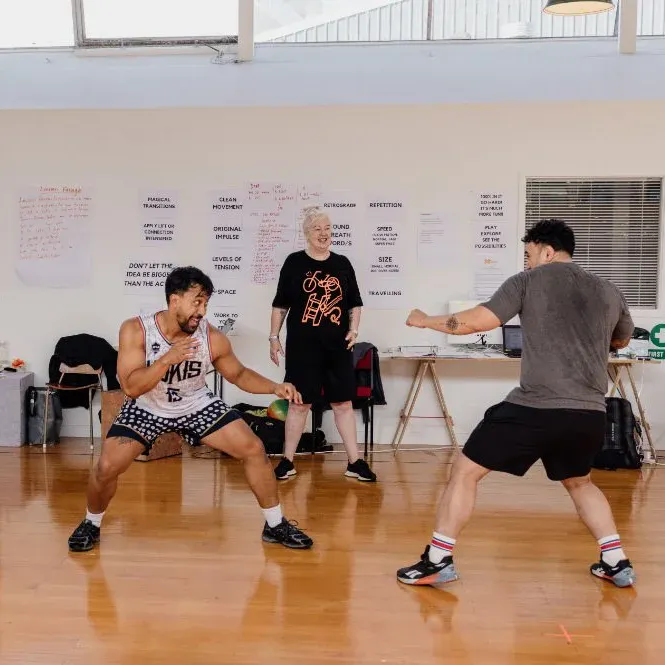
Between November and March, alongside letting my thoughts about the show develop and ‘land’, this is what we did in anticipation of our devising rehearsal time.
Finalising our creative team was immediately important. Jane Hakaraia, long-time collaborator with Massive Theatre Company, had already been confirmed as our lighting designer. Harmony Hogarth, long-time Massive company member, was confirmed as sound designer/composer.
We needed a set and costume designer, so after several interviews with recommended creatives, we chose to work with Lauren Millar, an emerging designer who had worked on our emerging artists’ production, Heart Go… BOOM! earlier in the year.
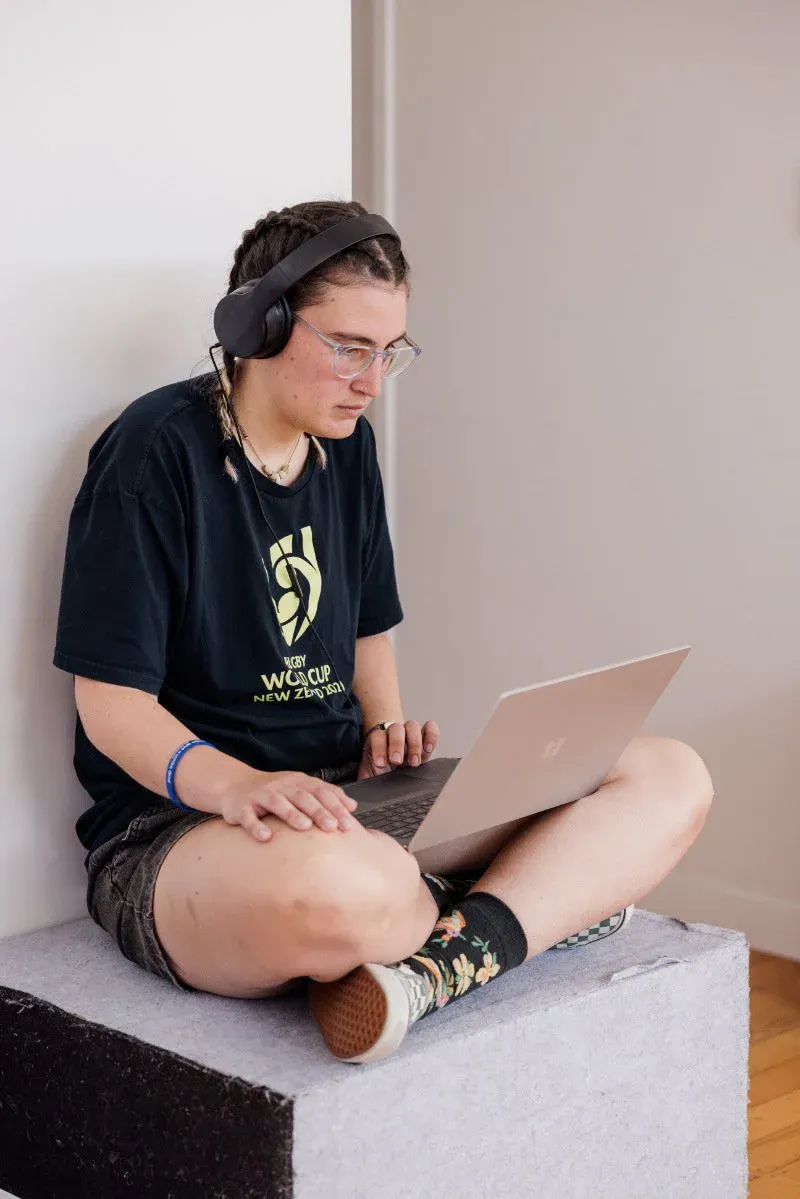
We then secured our stage manager, Chiara Niccolini, who I had developed a fantastic working relationship with on the Half of the Sky tour in 2023. Jamie Blackburn at Pilot Productions was our production manager and our General Manager Carrie Rae was going to produce the show. From within Massive, Kate our Marketing and Development Manager and Tane, our Marketing and Development Co-ordinator were marketing the show, alongside social media whizz Taran Maiava-Paris, who we had contracted in.
You can see that when we can, Massive likes to work with people we know and love, and then repeat. We love building on and developing that understanding, care and aroha for the mahi and each other. Complicité is a pou within our kaupapa and it’s key to all our relationships. We desire to have between us the way you are with a friend - that connection, understanding, belief, trust and aroha… plus a cheeky wink in the eye.
We had meetings with both Harmony (sound design/music composition) and Lauren (set and costume design), creating early ideas that later led to formalised ones.
We had a set design by the time we began in March and we had a sound/music ‘library’ of ideas to work with in rehearsal.
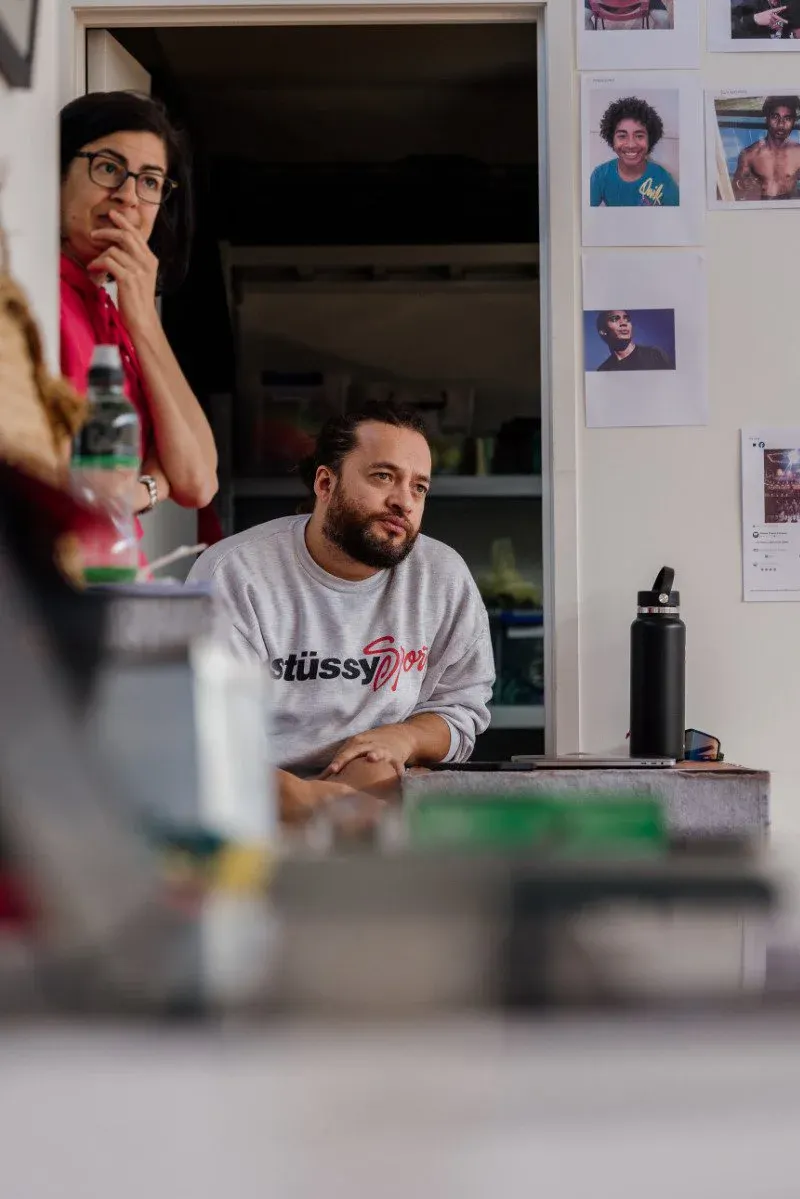
Scotty and I met weekly to talk through all manner of things pertaining to the show. Here is some of what we did over these meetings:
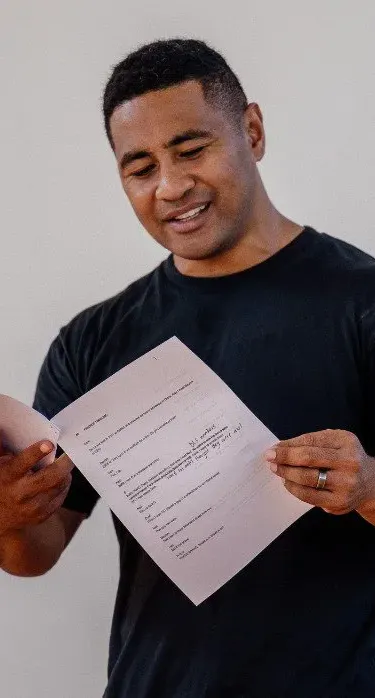
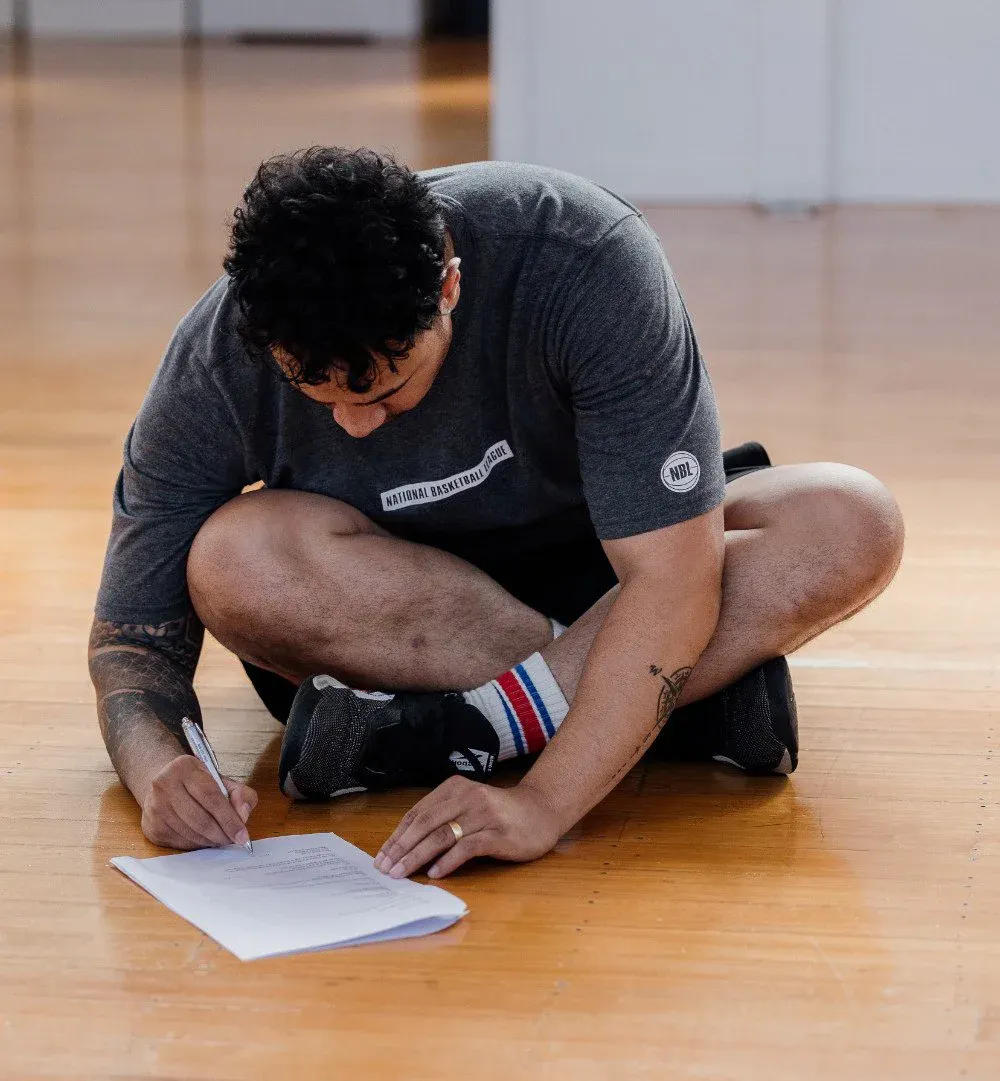
With every show we make at Massive, we create a creative contract with the cast, directors and stage manager - the people who will be in the rehearsal room for the whole time.
I believe this is one of the most important parts of Massive’s tikanga in making work. In creating it together, we align our values and what we want to make and why. It is highly beneficial to work together to create the vision in our heads and hearts into words on a page that we all agree on. We try to be as specific as we can be so that we are really naming what we are working to create.
Once it’s written, we sign it, all have copies of it, and we have it up on the wall of our rehearsal space. We come back to it and check in to see if we are on track. If things get tricky or crunchy we check in with it. It’s an important part of our devising collaboration matrix.
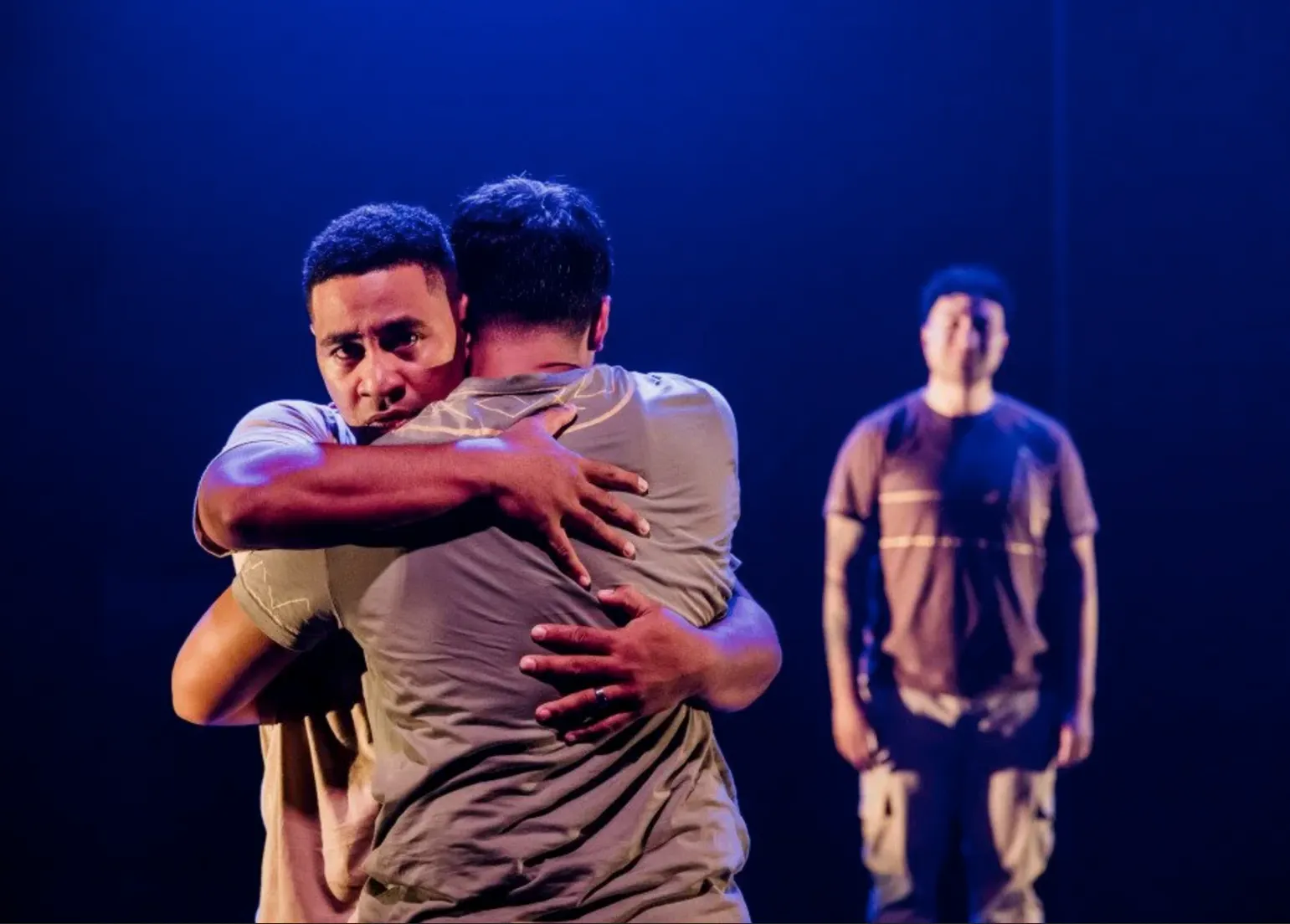
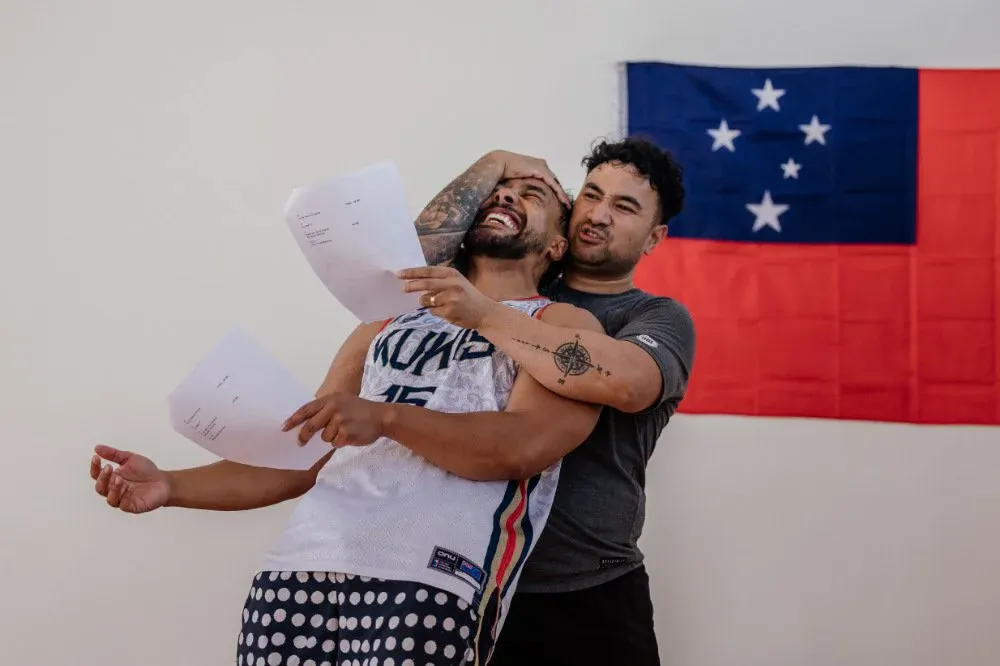
For this creative contract we decided to have everyone involved in the company of I LOVE YOU G to sign it. Dom, Neil and Beulah were very clear that everyone was on the same waka paddling for the one show together.
MISSION STATEMENT
I LOVE YOU G will be a theatre production that combines heartfelt truths and dynamic physicality. We want it to be impactful.
It will explore the story of Dom, Neils and Beulah’s friendship, how it got fractured and how you worked your way back from this. It is as much about each of you as it is about your friendship.
It is a hard and sometimes uncomfortable love letter to each other. It will require great bravery. It will expose the loud, the soft, the gentle, the hard, the questions and it will always challenge bullshit. No stone left unturned.
We want to lean into all the ways we have made theatre before while remaining open to the new.
We will weave these threads carefully. We will listen, see and feel so as to be alive to what resonates and what we dream around, to create the tapestry of I LOVE YOU G.
We hope I LOVE YOU G will allow the audience to dream around, reflect and have insight into their own lives.
GENERAL TERMS
PRINCIPLES
I LOVE YOU G will be a theatre production that combines heartfelt truths and dynamic physicality. We want it to be impactful.
It will explore the story of Dom, Neils and Beulah’s friendship, how it got fractured and how you worked your way back from this. It is as much about each of you as it is about your friendship.
To work for open unbiased, constructive, and clear communication.
Signed: (Everyone involved signed this contract).
We didn’t get properly started on this project until late 2021. They would write and send it to me. We would then meet through Zooms, read the writing, discuss it and decide where to next with ideas? It was very broad to start with, as it should be.
The big turning point within this was when Dom sent me a piece of writing about the fight that Neil, Dom and Beulah had had the night before Neil’s wedding. I hadn’t known about this event and they hadn’t talked about it either, with me or with each other. It was a beautiful piece of writing. But more intriguing was what it revealed about their friendship and where they were at with this event and its impact on their friendship.
Once I had ascertained that Dom was happy for me to bring this event up with the others, we discussed it together. We then moved forward where this was to be included in the writing. I asked them initially to write about ‘the night’ and anything they felt about it. I left it quite broad so they could just write. I also was aware they were writing about this and talking about this as a result of the show, not because they were talking about this. I left that aspect of how it might be for them to discuss amongst themselves, or not. For now they were keen to include this in the content of their writing.
A note about writing. I don’t usually think of devising and writing together. Usually when I ask people to respond to provocations, I want them to capture their ideas and thoughts in any way they can. The point is to capture and focus them, so we can then devise with them on the floor. Writing is just one way of capturing. We might end up using something someone has written at some point within a piece of devising, but that isn’t the point of the capturing.
Writing was the way the guys wanted to capture their thoughts, ideas and feelings for I LOVE YOU G, but we rarely ended up using the writing as first written in the finished show. We always worked with it on the floor and often it changed significantly from what had first been captured and sometimes, but less often, it was closer to the original writing.
I think it’s also important to note - we weren’t trying to create a play. We weren’t trying to create a linear narrative. We were trying to capture important moments, perspectives and insight into each of the guys, together and separately. How it might be structured was to come much later in the process.
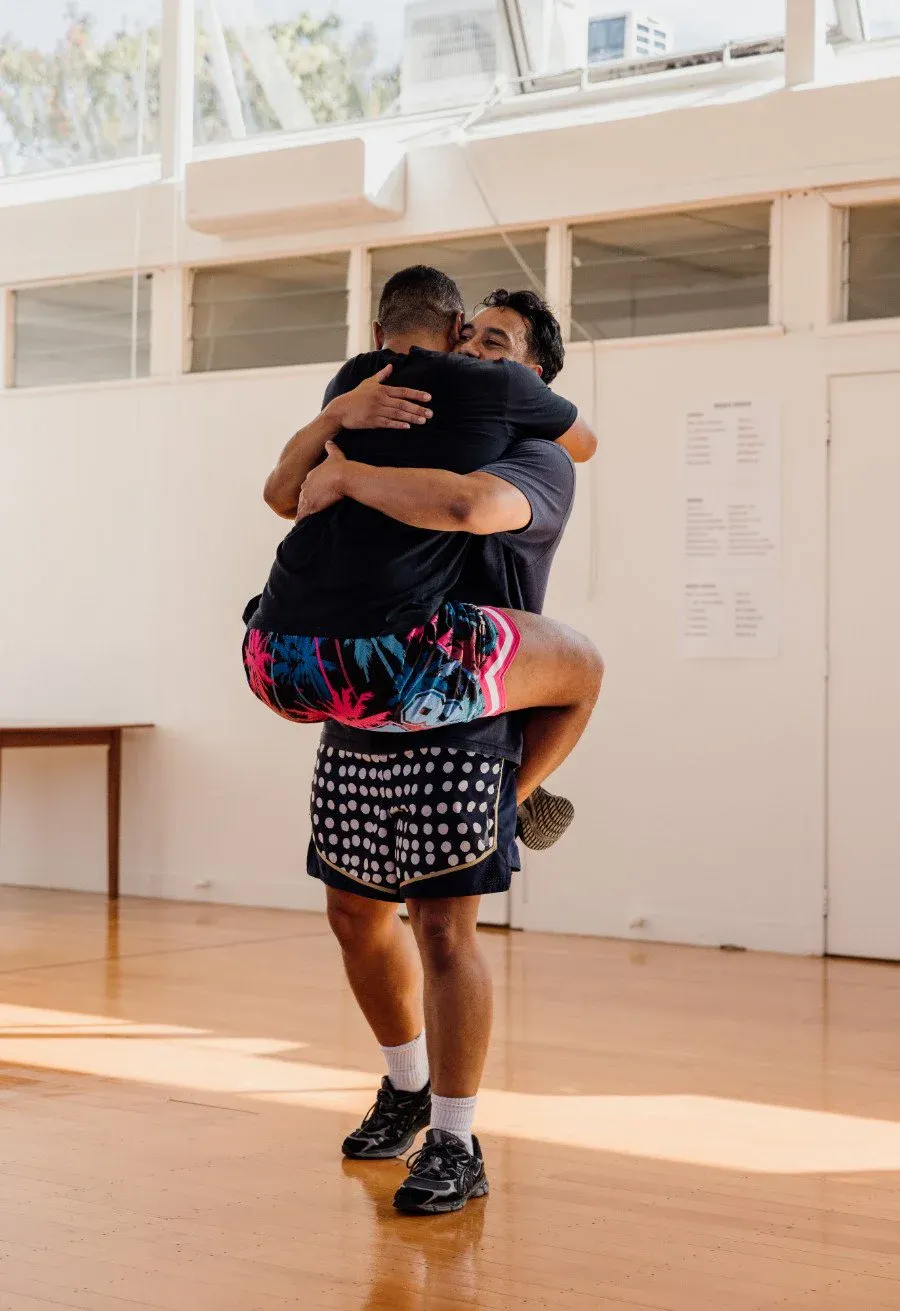
For our Le Va piece, many devising layers and explorations fed into our final creation:
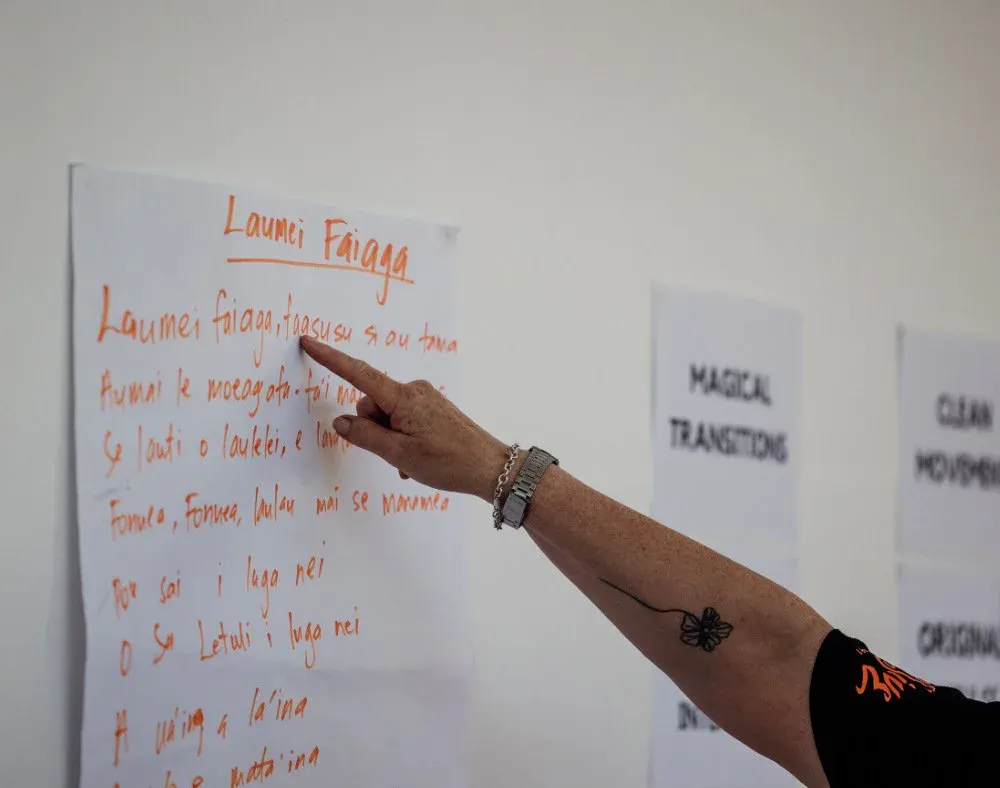
We got the boys to brainstorm ideas individually on big bits of paper about what le va was to them. We gave them these provocations:
Feels like?
Sounds like?
Looks like?
Elemental?
Physical manifestation?
Understanding of it?
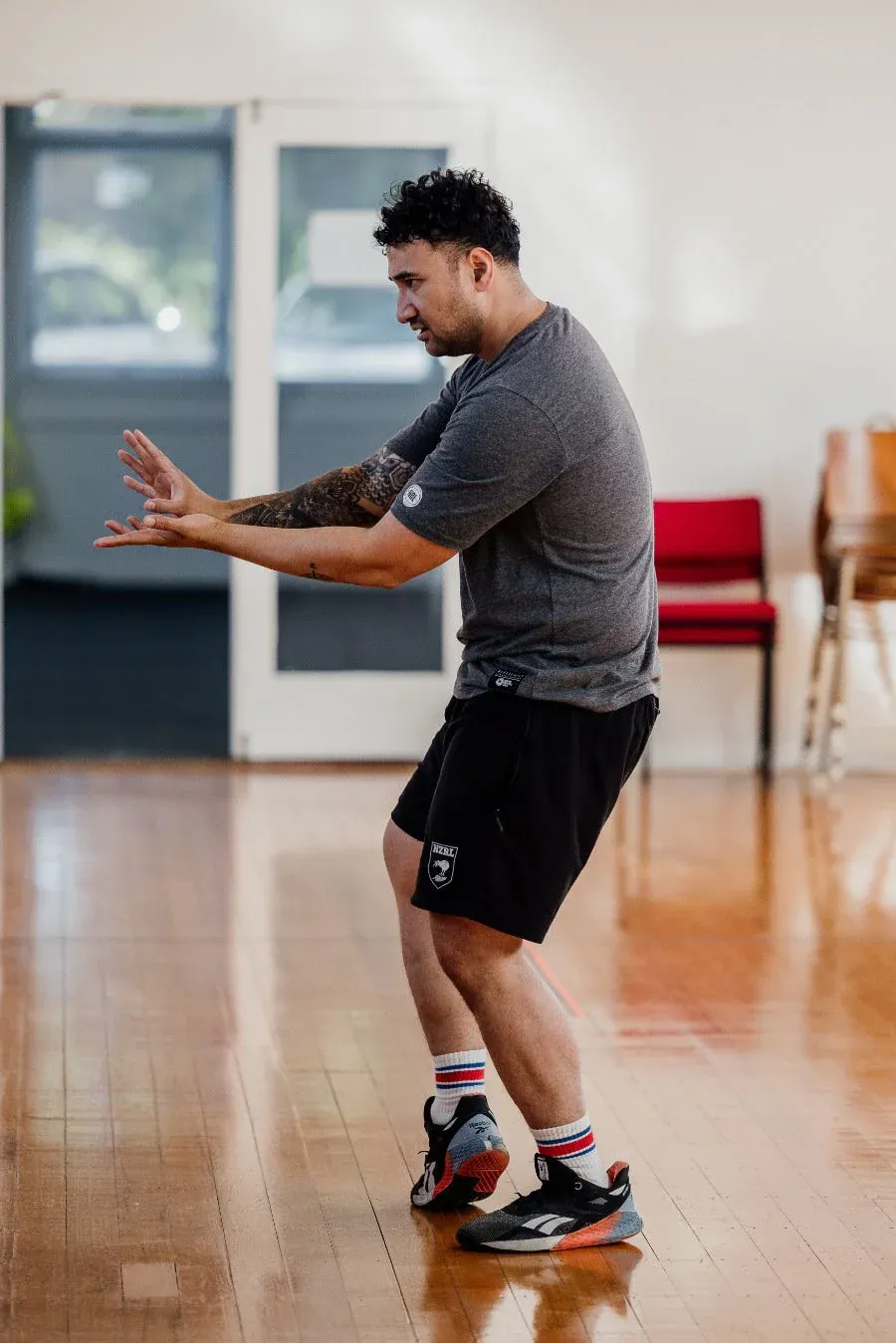
We always draw a line between devising and then rehearsing. We don’t want to rehearse something when we still know we are devising. Of course, sometimes when we are fine tuning/rehearsing we come across something that we want to include (or take out), but on the whole we don’t like to mix these two parts up.
For I LOVE YOU G, we (unusually) worked in the order of the show. So apart from working on the final piece at the beginning of our devising/rehearsal period, everything else was made sequentially.
We hadn’t thought this was the way we necessarily were going to work, but it became clear as we devised that this made sense to us. We needed to work on each piece in order, to know how it would impact on the next piece that was to come and why we chose what was next.
As we came to each piece we were to make, we looked at what form might be best for it. Most of the time we already knew what it would be, but sometimes we completely surprised ourselves. ‘We,’ being the boys, Scotty and me.
We would then explore and play in this form to find the way of the piece before beginning to detail and get into the specifics of devising it.
Every day of our five weeks was a big day of richness, even when we didn’t always get what we wanted or were still searching to find it.
The more we created, the more I had to reflect on what we had, what we still needed and how we would devise this. I always feel that I can’t really relax until the show is made, complete. It’s not an anxious state, just an alert one where I keep seeing, looking, listening and imagining about what we have and what we don’t.
Usually after each rehearsal day, I stay in the space and spend about another hour thinking on the day’s mahi. I look at all the material that Scotty and I created a potential narrative flow with, alongside what we are actually creating, and see what we need. I do the same in the morning, about one to two hours before rehearsals start. This is when I think about music we might use for pieces and re-think the day, the order, and see what is landing in me. It’s all part of completing the puzzle.
I spent a lot of time in the final week of rehearsal editing everything. How could we best tell this story, while still leaving lots for the audience to breathe into and experience? I loved this editing and being very particular.
It took us about three versions of creating the ending of our show, particularly the chunk that leads into Dom’s final piece and Breathe In Breathe Out.
We did a run of the show in that final week of rehearsals, and we could see where things were too easy, too overt.
So back we went to nutting out where that was happening and re-working some pieces and completely re-creating others. Sometimes you have to make something very full of stuff, to see what needs to go. The piece we called The Night was one of these pieces. Originally we had worked it so that Neil shared with the audience a lot of his internal feelings about the night leading up to when he had the fight with Beulah and Dom. It also had a lot of physicality in it. We had really liked this when we first devised it, but often when you put it in the bigger context of the show you see when things aren’t right.
We spent a day editing this piece on the floor and rehearsing it so that we only had glimpses of what Neil was feeling and also pulling back on what he revealed to Dom and Beulah, so that when he came out of the bathroom it was a shock to both the audience, Beulah and Dom. We continued to tweak this throughout the rehearsals and the season, as Scotty and I listened and watched how it was with the audience.
We completely re-worked/re-wrote the last pieces that Dom, Beulah and Neil did as ways of addressing their individual upset from the night. We realised the pieces we had were way to easy and made a mockery of the 18 months they had not talked about it. We had to really mine into and ask them to be courageous about the content in order for this to work in taking us to the end of the show.
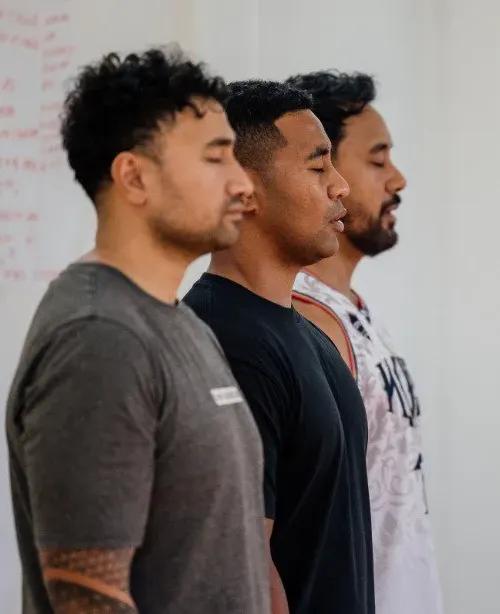
It is full testament to Neil, Dom and Beulah’s courage and desire to ‘leave no stone unturned’ that they came up with the pieces they did. Neil speaking to his jealousy of Beulah, Dom addressing being a lazy friend to Neil, and Beulah admitting how hard it was to show his soft and vulnerable side.
We worked these on the floor to find the best dynamic for how they shared these with each other, and again we kept tweaking these through the season to keep them potent and true.
There was LOTS of material we never used, that was in the narrative flow line we had created prior to devising/rehearsals starting. This is often the case in devising a show.
Scotty and I had thought our show should be one hour long more or less. So we used the timing of our pieces and what they were adding up to, as well as the content we were creating to measure the balance of everything and the telling of this particular story.
I have a strong reaction to long shows and also to shows which have intervals. On the whole, I don’t like either. I want to make sure that everything in a show is justified and needed to being there. I would rather an audience was left wanting more, than wishing that they had had less.
We had our finished show on our final Saturday of rehearsals. We ran it, and it was the show we wanted and had been striving to create every time we had to go back and re-work, re-make, re-think. We had one of our long-time Massives watching that final run and as soon as it finished he came over to me and said, “I need a hug miss.” He cried in my arms, and this made me doubly sure we had the show we wanted.
There is lots I haven’t talked about here - there is so much to talk about when creating a show. But I hope this gives you some insight into devising Massive style.
All our processes are open to anyone coming and watching what we do. So, if this has interested you and you want to know more, you are always welcome to join us in a workshop or rehearsal space to see what we do and how we talk about it as we do it. I also always welcome a kōrero over a cuppa. The doors to our wharenui are always open.
Thank you for reading.
Sam Scott
